Outdoor Power Tools

Toggle navigation

How to keep your construction tools safe

By Alexander on 19th July

Recently there’s been a sharp rise in thefts of construction and gardening tools. This is usually where tools are either taken from a vehicle or stolen out of a garage or garden.

The tools are then sold on either on social media or to pawn brokers for a profit.

Not only is it really inconvenient when your tools get pinched, but it also can cause a massive financial issue, even if you are insured. You may find that you have a drastic loss of earnings whilst you are obtaining new tools, especially if there is a wait-time on some specialist equipment. Also you may find that after an insurance claim they will increase your premiums for the following years.

So, what can you do to help protect your gardening and construction tools?  Well one option is to install some high-quality CCTV and most importantly some good signage that acts as a deterrent to would-be thieves. Next you need to make sure that you have good insurance that covers both your tools and loss of earnings. Shop around to get the best price on this but try not to compromise on cover level. Lastly keep a digital log of all the serial numbers of your tools, that way if they do get stolen you can give those numbers to the police and have more of a chance of recovering these if the thieves try to sell them on.

Furniture Movers for Better Lifting

By Jim on 28th October

Safe lifting is the cornerstone of working as a removal professional, a construction worker, or someone else who has to move heavy loads on a daily basis. Finding ways to lift these loads carefully and, above all, safely, is absolutely essential. Furniture movers can make a big difference and can help to move loads more safely and more efficiently. They will allow bigger loads to be moved without having to lift them manually which is a major improvement for professionals who want to protect their own physical health, as well as doing a good job for their clients.

  • Furniture movers make lifting safer for the people carrying it out.
  • They allow larger loads to be lifted and moved safely and more easily.
  • Furniture movers come with ratchet straps for securing the load.
  • Items can easily be loaded, even bulky ones, by jacking them up onto the mover and moving them into place safely.

What are Beam Clamps and Why are they Important?

By Jim on 28th September

These essential pieces of equipment are used in lifting and rigging, clamping onto a structural steel beam so that loads can be lifted, managed and moved safely. They can be used with various cranes and other lifting equipment to make lifting safer and more efficient. In turn, this also makes lifting processes simpler, more straightforward, safer, and more efficient; the benefits are far reaching and should not be underestimated by people operating in the lifting industry.

So what exactly is a beam clamp, and how does it work in a little more detail? A beam clamp might also be known as a girder clamp so don’t get confused between the two. They are used to attach a hoist to a runway, lifting beam or similar, so that the hoist can then be used to lift loads. They can be highly customisable and the right beam clamp needs to be used for the right environment. Sometimes this will involve treating the beam in a certain way, and it will certainly involve picking the correct capacity and specifications for the task in hand. The beam clamp used will always need to be fully compatible with the lifting equipment.

How can beam clamps be used? Are they really necessary?

Beam clamps are a necessary means of attaching a lifting point to a beam/girder of a crane or other lifting device. They are very important for safety on site during any lifting procedures. Failure to use the correct lifting equipment can result in damage of the equipment, damage to the load, as well a serious injury.

One of the great aspects of a beam clamp is that it is usually lightweight and easy to transport, so it can be used by mobile teams who are travelling to different sites. It also makes it easier to have the correct beam clamp to hand – because it isn’t difficult to transport them, multiple clamps can be taken from place to place.

How do beam clamps work? Some important factors to consider.

All beam clamps will have different operating mechanisms and will be suited to their own particular purposes. Some operate with a scissor action, while others have bolt fixings or screw locks. However the beam clamp works, it is very important that it is safely fixed onto the beam; a shackle can help with this. It may even be included when buying beam clamps, depending on the intended purpose of the lifting equipment.

As with any kind of lifting equipment, it is absolutely essential that any beam clamps used are of the right specification, which also include the weight capacity. 15,000kg capacity tends to be the upper limit, but check what you need as it may be possible to select a beam clamp with a 6,000kg capacity, or possibly even 3,000kg if it will not be needed for heavy duty industrial lifting. Check all specifications and compatibility in full before you go ahead with your purchase.

Using Jib Crane with a Hoist

By Jim on 31st July

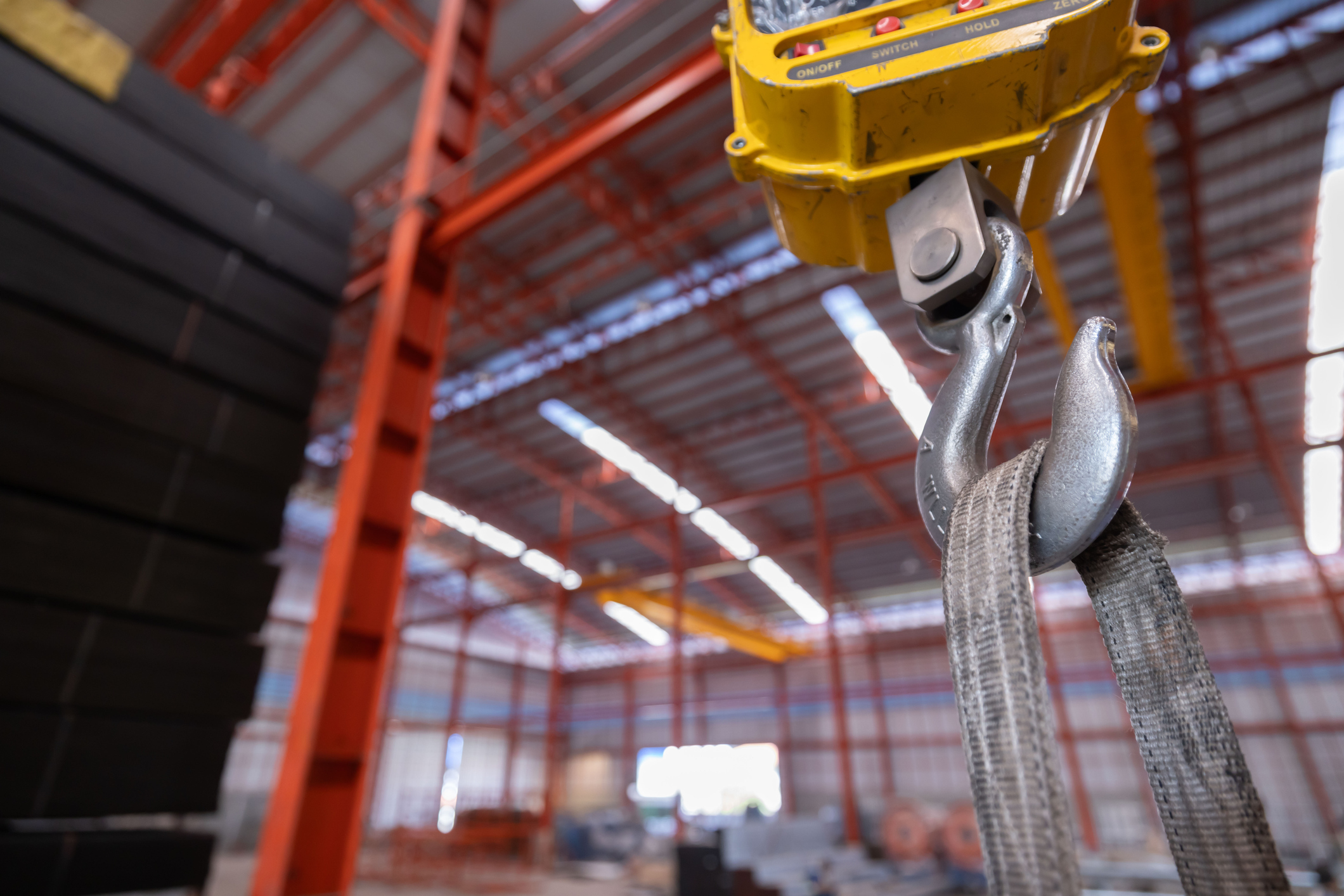
Jib cranes are often used more flexibly than fixed gantry cranes (though less flexibly than mobile cranes, of course). They will need to use a hoist, often attached to a sling, to lift up loads safely and make sure they are properly balanced. The perfect one will work in conjunction with your jib crane and will lift loads safely, keeping the weight well distributed and making sure they are balanced throughout the lifting process.

Wire rope hoists and chain hoists can both be used with jib cranes. Both are electric hoists rather than manual and will require little manual input from the operator. The operator will instead be there to monitor the lift and make sure it happens safely and as expected, rather than having to do any of the actual physical lifting. Jib crane specifications will dictate which type of sling is best to use, and for which kind of lift.

Bespoke Jib Cranes for Low Headroom

By Admin on 29th February

One of the best ways to combat low headroom in a workshop or other commercial setting is with a jib crane. Adaptable and flexible, jib cranes can be customised so that they fit into low headroom areas and will still be able to perform the same set of tasks as required. Jib cranes are more useful than other types of crane for this very reason.

One of the main ways a jib crane can be made to fit into a tighter, low headroom space is by being under braced. This still allows for maximum hook path, whilst allowing for the crane to be fitted into a low headroom area. Jib cranes can also have different mounting types that make them more accommodating, like wall or post mountings. In particularly tight spaces, bespoke jib cranes can be made from scratch to fit into the space and provide the required functionality for the lifting operatives.

Posts navigation

Page 1 Page 2 … Page 11 Next page

Navigation

  • Home
  • Contact us

Categories

  • Construction Tools
  • Gardening and Landscaping Tools
  • Landscaping

Portable Aluminium Gantry

An aluminium gantry is portable unlike the conventional steel gantries, which do not have this quality and therefore they are best suited to the projects of the contractor who may need to transport the equipment to various jobs.

Such lightweight frames can normally be used to support loads between 500kg and other tonnes depending on the model, and are especially handy in tasks such as engine removal, equipment maintenance and moving heavy materials in places where a fixed crane is unsuitable.

They can be moved to any height you want, most models can be assembled and disassembled rather fast, which is a real time-saving among other things when you are working against strict deadlines.

Recent Posts

  • How to keep your construction tools safe
  • Furniture Movers for Better Lifting
  • What are Beam Clamps and Why are they Important?
  • Using Jib Crane with a Hoist
  • Bespoke Jib Cranes for Low Headroom

Copyright © 2025 Outdoor Power Tools

  • Home
  • Contact us